Are you tired of serving chicken wings that promise crispiness but deliver a disappointing, soggy bite? The quest for that perfect, audibly crunchy wing with a succulent, juicy interior often feels like a culinary enigma. Many home cooks struggle to replicate the restaurant-quality texture that makes chicken wings an irresistible treat. The secret, however, often lies in a technique professional chefs have mastered: par-frying. This method is a game-changer, transforming ordinary wings into golden, crackly masterpieces. This guide will demystify par-frying, explaining its science, detailing various methods, and providing advanced tips to ensure every batch of your chicken wings achieves legendary crispness.

Understanding Par-Frying: The Foundation of Crispy Wings
Par-frying, or partial frying, is a foundational culinary technique that involves cooking food partway through before a final cooking stage. It’s a strategic step designed to prepare the food for ultimate crispness and improved texture, especially beneficial for items like chicken wings and French fries.
What is Par-Frying?
Table is empty.At its core, par-frying is a preliminary cooking phase. For chicken wings, this typically means a low-temperature immersion in oil, a gentle boil (parboiling), or a slow roast (par-roasting) before the final high-heat cooking. Think of it as a warm-up act that sets the stage for a spectacular main performance. This initial cook doesn’t aim to brown or fully crisp the skin; instead, it focuses on rendering fat, tenderizing the meat, and most importantly, reducing the moisture content within the wing. This critical moisture removal is what makes par-frying synonymous with the first step of the highly effective “double-fry” technique, renowned for producing superior results.
The Science Behind the Crisp: Why Par-Frying Works Wonders
The magic of par-frying is rooted deeply in food science. Chicken skin is primarily composed of fat and water. For true crispness, this water must evaporate, and the fat needs to render and become brittle. Par-frying initiates this process gently and effectively.
Firstly, the initial low-temperature cook (whether frying, boiling, or roasting) efficiently draws out a significant amount of moisture from the chicken skin without burning it. This dehydration is crucial because excessive moisture leads to steam, which prevents the skin from crisping. Secondly, this lower heat environment allows the fat beneath the skin to slowly render and melt away, making the skin thinner and more prone to bubbling and crisping during the subsequent high-heat cook. Simultaneously, the low temperature helps break down tough collagen connective tissues within the wing, converting them into tender gelatin. This process ensures the meat remains incredibly juicy while the skin prepares for its ultimate transformation. The increased surface area created by the skin’s bubbling, combined with the dry, rendered fat, maximizes the Maillard reaction—the chemical process responsible for the golden-brown color and complex, savory flavors we crave in perfectly crispy food.
Key Benefits of Par-Frying for Your Wings
Embracing the par-frying technique unlocks several significant advantages for your chicken wings:
- Unmatched Crispiness and Juicy Interior: This is the primary draw. By systematically removing moisture and rendering fat, par-frying ensures a skin that achieves an unparalleled, explosive crunch, while the interior meat remains incredibly tender and moist.
- Time Efficiency and Convenience: Par-frying allows you to partially cook a large batch of wings in advance. You can cool and refrigerate them for several days or even freeze them. This means when you’re ready to serve, the final high-heat cooking takes only a fraction of the time, making it ideal for entertaining or quick weeknight meals.
- Enhanced Flavor and Texture: The breakdown of collagen contributes to a more tender texture throughout the meat. Furthermore, by creating a dry, porous surface, par-frying allows sauces and seasonings to adhere better and penetrate more effectively, leading to a more flavorful bite.
Step-by-Step: How to Par-Fry Chicken Wings for Optimal Crispiness
Achieving that legendary crisp requires precision and adherence to a proven methodology. Here’s how to master par-frying using different approaches.
Preparing Your Wings for Success
Regardless of the par-frying method you choose, proper initial preparation is non-negotiable for crispy results.
- Sourcing Fresh Wings: Start with good quality, fresh chicken wings. Ensure they are fully thawed if using frozen.
- Patting Dry: This is perhaps the single most crucial step. Use paper towels to thoroughly pat every surface of the chicken wings dry. Any excess surface moisture will steam rather than crisp, hindering your efforts. For even better results, arrange the patted-dry wings on a wire rack set over a baking sheet and refrigerate them uncovered for a few hours, or even overnight. This air-drying process further dehydrates the skin.
- Seasoning (Optional Before Par-Fry): You can lightly season your wings with salt and pepper before the initial cook, or wait until the final crisping stage, depending on your desired flavor profile.
The Par-Frying Methods
There are several effective ways to par-cook your wings, each with its own advantages.
Method 1: Low-Temperature Oil Fry (Confit-style)
This method mimics the French confit technique, yielding incredibly tender meat and a perfectly prepared skin for crisping.
- Process: In a large, heavy-bottomed pot or Dutch oven, add a neutral-flavored oil (like peanut, canola, or vegetable oil) sufficient to fully submerge the wings. Heat the oil to a low temperature, typically between 250°F and 275°F (120-135°C). Carefully add the prepared wings, ensuring not to overcrowd the pot.
- Duration: Let the wings gently simmer in the oil for 20-30 minutes. They should cook through but remain pale, not browned.
- Cooling and Resting: Once cooked, remove the wings with tongs or a spider strainer and place them on a wire rack set over a baking sheet to drain and cool completely. This cooling period is vital; it allows the rendered fat to solidify slightly and the skin to further dry out. They can be refrigerated at this stage for up to 3-4 days, or frozen for longer storage.
Method 2: Parboiling (Boil then Bake/Fry)
Parboiling is an excellent alternative that still achieves significant moisture reduction and fat rendering.
- Process: Bring a large pot of heavily salted water to a rolling boil. Carefully add the prepared wings and boil for 7-8 minutes.
- Drying Technique: Immediately drain the parboiled wings thoroughly. Spread them out on a wire rack over a baking sheet and pat them vigorously dry with paper towels. Allow them to air-dry for at least 30 minutes, or preferably refrigerate uncovered for a few hours or overnight to remove all residual surface moisture.
- Transition to Final Cooking: Once completely dry, the wings are ready for their crisping stage.
Method 3: Par-Roasting (Oven Pre-Cook)
This method is perfect if you want to avoid deep frying altogether in the first stage.
- Process: Preheat your oven to a lower temperature, around 250-300°F (120-150°C). Arrange the prepared wings in a single layer on a wire rack set over a baking sheet.
- Duration to Dry Skin: Roast for 30-45 minutes, or until the skin appears dry and slightly shrunken, and some fat has rendered out. The wings should be cooked through but not yet crispy or browned.
- Cooling: Allow them to cool completely on the rack before the final cooking.
The Crucial Second Cook: Achieving Golden Perfection
The final high-heat cook is where the magic truly happens, transforming your par-cooked wings into crispy delights.
- High-Temperature Frying: If deep frying, reheat your oil to 350-400°F (175-200°C). Fry the cooled, par-cooked wings in batches, ensuring not to overcrowd the fryer, for 5-8 minutes or until deep golden brown, bubbly, and incredibly crispy.
- Baking/Air Frying: If baking, preheat your oven to a high temperature, 400-450°F (200-230°C). Roast the wings on a wire rack for 20-30 minutes, flipping halfway, until golden brown and crisp. For air frying, place wings in a single layer in the basket, set to 375-400°F (190-200°C) for 15-25 minutes, shaking the basket frequently, until desired crispness is achieved.
- Visual Cues for Doneness: Look for a deep golden-brown color, a visibly bubbly and textured skin, and a firm, crisp feel when gently tapped.
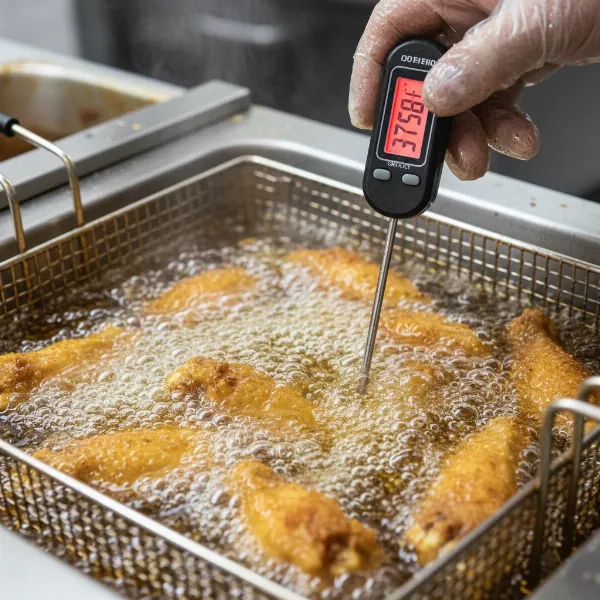 A thermometer accurately measuring the oil temperature during the double-frying process for crispy chicken wings.
Advanced Tips and Troubleshooting for the Crispiest Wings
Even with the right technique, minor adjustments can elevate your wings from great to absolutely legendary.
Choosing the Right Oil
The type of oil you use for deep frying matters significantly. Opt for oils with a high smoke point, such as peanut oil, canola oil, vegetable oil, or grapeseed oil. These oils can withstand the high temperatures required for the second cook without breaking down and imparting off-flavors. It’s also paramount to use fresh oil for frying; old, used oil can negatively impact the flavor and crispiness of your wings.
The Role of Baking Powder and Cornstarch
While par-frying is a powerful technique on its own, adding a small amount of baking powder or cornstarch can boost crispiness, especially for baked or air-fried wings. Baking powder (aluminum-free, if possible, to avoid metallic taste) reacts with moisture on the chicken skin to create tiny bubbles, increasing the surface area and promoting a lighter, crispier texture. Cornstarch acts similarly, creating a fine, dry coating that crisps up beautifully. Typically, a tablespoon per pound of wings is sufficient. Toss the dried wings with baking powder or cornstarch before the initial cook or prior to the final crisping stage, depending on your method.
Common Mistakes to Avoid
- Overcrowding the Fryer: This is a cardinal sin of frying. Overcrowding lowers the oil temperature dramatically, leading to soggy, greasy wings instead of crispy ones. Fry in small batches to maintain optimal oil temperature.
- Insufficient Drying: As mentioned, moisture is the enemy of crispiness. Ensure your wings are thoroughly dry before any cooking method. Don’t skip the air-drying step if possible.
- Skipping the Rest Period: The resting period between the par-fry and the final cook is crucial. It allows residual heat to redistribute, internal moisture to evaporate, and the skin to further dry out, all contributing to a superior crisp.
“The secret to truly crispy wings lies in a two-stage cooking process. The first stage renders fat and tenderizes the meat, setting the stage for an explosive crunch in the second high-heat cook.” – Chef Stephen Parker, Corporate Executive Chef at Black Tap Craft Burgers & Beer
Beyond Wings: Other Foods That Benefit from Par-Frying
The genius of par-frying isn’t limited to just chicken wings. This technique can be applied to a variety of foods, significantly improving their texture and cooking efficiency.
French Fries and Other Potato Products
Perhaps the most famous application of double-frying is for French fries. Par-frying potatoes at a lower temperature (blanching) cooks them through and gelatinizes the starch, then a second fry at a higher temperature crisps the exterior to perfection. This two-stage process results in fries that are fluffy on the inside and incredibly crispy on the outside, a texture impossible to achieve with a single fry. This method is also excellent for potato wedges or homemade potato chips.
Breaded and Battered Items
For items like breaded catfish, chicken tenders, or even certain vegetables, par-frying can create a superior crust. The initial fry sets the breading or batter, providing structural integrity and beginning the dehydration process. When finished, whether by baking or a second fry, these items achieve a much crispier exterior and can sometimes even absorb less oil overall, making for a less greasy product.
Make-Ahead Meal Prep
Par-frying is a fantastic strategy for meal prepping. Foods like spring rolls, samosas, or even certain fried appetizers can be par-fried, cooled, and then frozen or refrigerated. This allows for quick “finish-frying” right before serving, delivering a fresh-fried experience with minimal on-demand cooking time. This convenience makes it a staple in many commercial kitchens and can be a huge time-saver for home cooks.
Conclusion
The pursuit of perfectly crispy chicken wings ends with par-frying. By embracing this two-stage cooking method—whether through a low-temperature oil bath, parboiling, or par-roasting—you unlock the scientific secrets to rendering fat, eliminating moisture, and tenderizing meat. This meticulous approach ensures that every wing emerges with an irresistible, crackling exterior and a juicy, flavorful interior. From make-ahead convenience to achieving a superior texture, par-frying is a technique that empowers you to elevate your culinary creations far beyond the ordinary. So, are you ready to transform your wing game forever and delight your guests with the crispiest chicken wings they’ve ever tasted?
Frequently Asked Questions
What is the ideal oil temperature for par-frying wings?
For par-frying wings in oil, an ideal temperature range is typically between 250°F and 275°F (120-135°C). This lower temperature allows the wings to cook through and render fat gently without browning the skin too quickly, setting the stage for the final crisping.
Can I par-fry wings and then cook them in an air fryer?
Absolutely! Par-frying (especially parboiling or low-temp roasting) followed by air frying is an excellent method for achieving crispy wings without a deep fryer. Ensure the par-cooked wings are thoroughly dried and cooled before air frying at a higher temperature (e.g., 375-400°F or 190-200°C) until golden and crisp.
How long can par-fried wings be stored before the final cook?
After par-frying and cooling completely, wings can be stored in an airtight container in the refrigerator for 3-4 days. For longer storage, you can freeze them for up to 2-3 months. Always thaw frozen wings slightly before the final cook to ensure even crisping.
Does parboiling make wings less flavorful?
When done correctly, parboiling actually enhances the crispness by removing excess fat and surface moisture, which can otherwise make wings soggy. While it may dilute some surface seasoning, this can be easily remedied by re-seasoning before the final cook or tossing in a flavorful sauce after crisping. Many find the trade-off for superior texture well worth it.