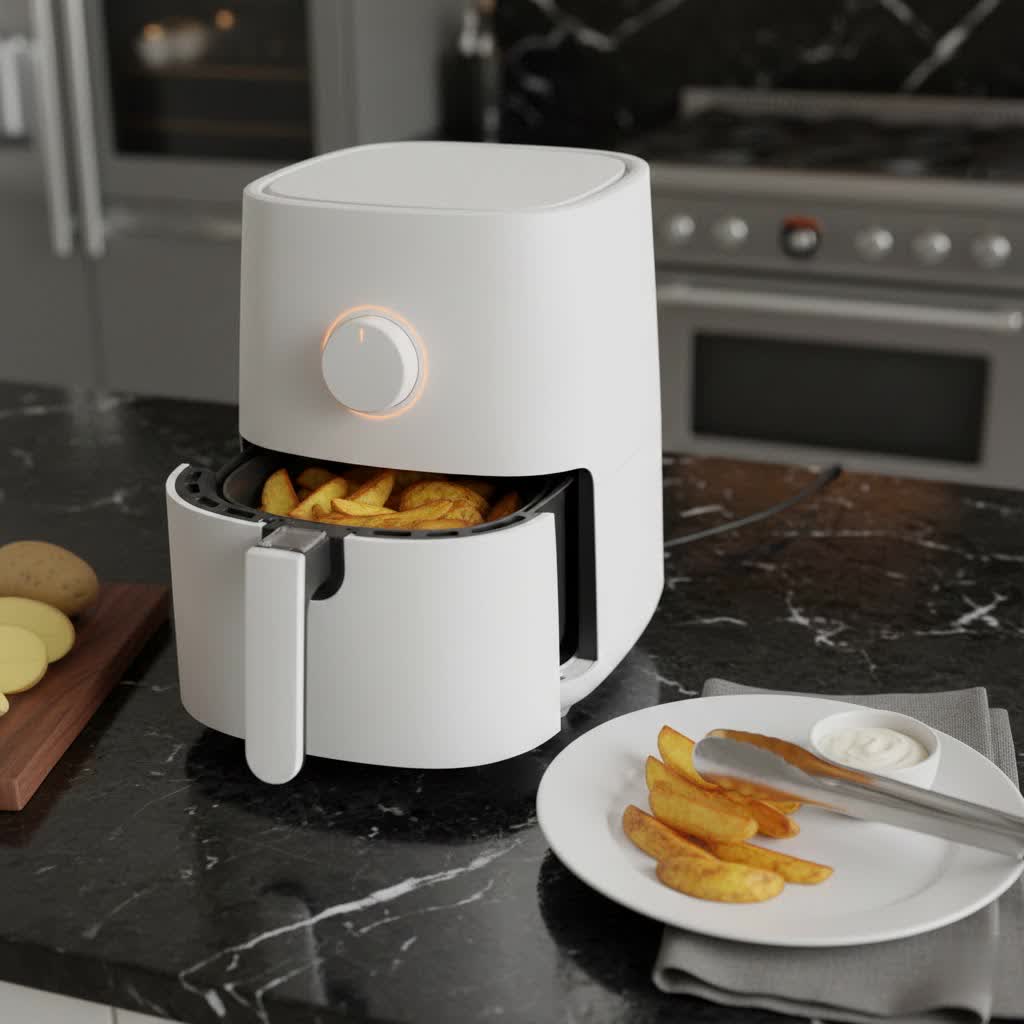
Imagine biting into a perfectly crisp, naturally sweet fruit chip, bursting with concentrated flavor. What if you could create these delightful snacks in your own kitchen, using a device you likely already own? The air fryer, a kitchen hero known for its ability to crisp up fries and roast vegetables, also holds a hidden talent: dehydrating. This guide will unlock the secrets to transforming fresh fruits into irresistible, healthy dehydrated chips using your air fryer, offering a convenient alternative to store-bought options filled with additives.

Air Fryer: All You Need to Know for Dehydrating
Air fryers have revolutionized home cooking, offering a healthier way to enjoy fried foods. But their utility extends far beyond just frying. Understanding how an air fryer works is key to harnessing its dehydrating capabilities.
What is an Air Fryer? How Does It Work?
Table is empty.An air fryer is essentially a compact convection oven. It operates by circulating hot air at high speeds around food, creating a crispy exterior similar to deep-frying but with little to no oil. For dehydration, this powerful circulation of air is precisely what we need. While typical air frying uses higher temperatures, dehydrating in an air fryer leverages its ability to maintain consistent, lower temperatures over extended periods. This gentle, continuous airflow gradually removes moisture from food, preserving its nutrients and intensifying its natural sweetness, turning soft fruit into crisp chips.
Benefits of Using an Air Fryer for Dehydrated Fruit Chips
Opting for your air fryer to make fruit chips comes with a host of advantages. Firstly, it allows you to create healthier snacks at home, free from added sugars, preservatives, or artificial flavors often found in commercial varieties. You control the ingredients, ensuring a pure and natural treat. Secondly, it’s a fantastic way to preserve seasonal fruits, extending their shelf life and reducing food waste. You can enjoy the taste of summer berries or autumn apples long after their season has passed. Finally, it offers convenience. While dedicated dehydrators exist, using an air fryer means one less appliance taking up counter space, and many models now include specific “dehydrate” functions or precise low-temperature controls that make the process straightforward.
Common Air Fryer Types for Dehydrating
Air fryers come in various designs, each offering different advantages for dehydration. Understanding these types can help you maximize your results.
- Basket-style Air Fryers: These are the most common, featuring a pull-out drawer with a perforated basket. They are excellent for smaller batches and usually compact. For dehydration, ensure good air circulation by not overcrowding the basket and, if possible, using a single layer or a multi-rack accessory if available for your model.
- Oven-style Air Fryers (Air Fryer Ovens): These resemble small toaster ovens and often come with multiple racks or rotisserie capabilities. Their larger capacity and multiple levels make them ideal for dehydrating bigger batches of fruit simultaneously. Many oven-style air fryers also boast a dedicated “dehydrate” preset, which automatically sets the optimal low temperature and long cooking time.
- Air Fryers with Dehydrate Function: Some advanced air fryer models specifically include a “dehydrate” setting. This feature is a game-changer as it’s designed to maintain the consistent low temperatures (typically between 100°F and 160°F or 40°C and 70°C) necessary for effective moisture removal without cooking the fruit. If your air fryer has this function, it will simplify the process considerably.
Guide to Choosing the Right Air Fryer for Dehydration
While most air fryers can dehydrate to some extent, some are better equipped for the task than others. Consider these factors when making your choice or evaluating your current appliance.
Determine Your Usage Needs
Before diving into features, consider how you intend to use your air fryer for dehydration.
- Family Size: A larger family or frequent snackers will benefit from a higher-capacity air fryer, especially an oven-style model with multiple racks, to handle bigger batches.
- Frequency: If you plan to dehydrate fruit regularly, an air fryer with a dedicated dehydrate function and precise temperature control will be a worthwhile investment for consistent results and ease of use.
- Favorite Fruits: Some fruits, like strawberries, require longer dehydration times at lower temperatures. Ensure your chosen air fryer can sustain these settings.
Choosing the Right Capacity and Wattage
Capacity is crucial, as successful dehydration requires fruit slices to be spread in a single layer to allow for even airflow.
- Smaller Air Fryers (2-4 quarts): Suitable for individual servings or small batches of fruit chips.
- Medium Air Fryers (4-6 quarts): Good for couples or small families, offering a balance of size and functionality.
- Large Air Fryers (6+ quarts or oven-style): Best for larger families or those who want to prepare significant quantities of dehydrated fruit at once. These often come with multiple racks, maximizing space efficiency.
Wattage (power) influences how quickly an air fryer heats up and how consistently it maintains temperature. While higher wattage generally means faster cooking, for dehydration, consistent low heat is more important. Most modern air fryers offer sufficient wattage for effective dehydration.
Material and Design
The construction materials and design of your air fryer play a role in both performance and maintenance.
- Interior Material: Non-stick coatings are common, making cleanup easier. Stainless steel interiors are also popular for durability and aesthetics.
- Exterior Material: Look for a durable, easy-to-wipe-clean exterior.
- Design for Dehydration: Consider models that offer accessories like dehydrating racks or skewers. A square basket or oven design tends to offer more usable space than a round one for arranging fruit slices. Easy disassembly for cleaning is also a plus, especially after sticky fruit residues.
Essential Features for Dehydration
Beyond basic air frying, specific features elevate an air fryer’s dehydrating capabilities.
- Dedicated Dehydrate Preset: As mentioned, this is ideal. It takes the guesswork out of setting the right temperature and time.
- Wide Temperature Range with Low Settings: Your air fryer should be able to operate consistently at low temperatures, ideally as low as 100°F (40°C) up to 160°F (70°C). Some air fryers only go down to 250°F (120°C), which is too high for true dehydration and will cook, rather than dry, your fruit.
- Precise Temperature Control: The ability to adjust temperature in small increments (e.g., 5-degree intervals) gives you more control over the drying process.
- Long Timer Function: Dehydration can take several hours (4 to 12+ hours), so an air fryer with a timer that can be set for extended periods is crucial.
- Multiple Racks/Trays: For oven-style air fryers, multiple wire racks are invaluable for maximizing batch size and ensuring even air circulation around all fruit slices.
Brands and Price Points
Numerous reputable brands offer air fryers with varying features and price points. While we won’t list specific models, generally, higher-priced models often include dedicated dehydrate functions, larger capacities, and more precise controls. However, many mid-range air fryers with manual temperature control can still achieve excellent results with a bit of monitoring. Focus on features that align with your dehydration goals rather than just brand name.
Crafting Dehydrated Fruit Chips in Your Air Fryer: A Step-by-Step Guide
Making dehydrated fruit chips is a process that requires patience and attention to detail. Follow these steps for the best results.
Essential Preparation for Perfect Fruit Chips
Preparation is key to evenly dried, crispy fruit chips.
- Wash and Dry: Thoroughly wash your fruit and pat it completely dry. Any residual water will prolong the dehydration time.
- Thin, Uniform Slices: This is perhaps the most critical step. Use a sharp knife, a mandoline slicer, or a food processor with a slicing attachment to achieve slices as thin and uniform as possible (aim for 1/8 to 1/4 inch thick). Inconsistent thickness will lead to uneven drying, with some pieces burning while others remain chewy.
- Pre-treatment (Optional but Recommended):
- For apples and pears: To prevent browning, soak slices in a solution of lemon juice and water (e.g., 1 part lemon juice to 3 parts water) for 5-10 minutes. Pat dry thoroughly before arranging in the air fryer. This also adds a subtle tangy flavor.
- For added flavor: You can lightly sprinkle spices like cinnamon (especially good for apples), nutmeg, or a tiny pinch of sugar-free sweetener on the fruit slices before drying.
- Arrange in a Single Layer: Place the fruit slices in the air fryer basket or on racks in a single layer, ensuring they do not overlap. Overcrowding will obstruct airflow and result in uneven or prolonged drying. Using parchment paper cut to fit the basket can help prevent sticking, especially with juicier fruits like strawberries.
Recommended Fruits and Their Preparation
While many fruits can be dehydrated, some are particularly well-suited for air fryer chips.
- Apples: Core and slice thinly. Pre-treatment with lemon juice is highly recommended. Cinnamon is a classic pairing.
- Strawberries: Hull and slice into thin rounds. Larger strawberries work best.
- Bananas: Peel and slice thinly. A quick dip in lemon water can prevent excessive browning.
- Pears: Core and slice thinly. Lemon water helps prevent browning.
- Pineapple: Peel, core, and slice into thin rings or half-moons.
- Citrus (Oranges, Lemons, Limes): Slice very thinly, including the peel. These are often used for garnish or infusing drinks.
Air Fryer Settings for Dehydration
Optimal settings will vary slightly depending on your air fryer model and the fruit’s water content. However, here’s a general guideline:
- Temperature: Aim for a low temperature, typically between 130°F (55°C) and 160°F (70°C). If your air fryer has a dedicated “dehydrate” function, use it. If not, set it to the lowest possible temperature.
- Time: Dehydration is a slow process. Expect times to range from 4 to 12+ hours.
- Apples/Pears: 4-8 hours at 135°F (57°C) to 150°F (65°C).
- Strawberries: 6-10 hours at 130°F (55°C) to 140°F (60°C).
- Bananas: 6-12 hours at 130°F (55°C) to 145°F (63°C).
Crucial Steps During Dehydration:
- Flip and Rotate: Every 1-2 hours, flip the fruit slices and rotate the racks (if using multiple) to ensure even drying.
- Check for Doneness: Fruit chips are done when they are dry to the touch, pliable but no longer sticky, and snap when bent (for crisp chips). Continue drying until desired crispness is achieved. They will crisp up further as they cool.
- Cool Completely: Transfer the dehydrated fruit chips to a wire cooling rack and allow them to cool completely before storing. This is vital for achieving maximum crispness and preventing condensation, which can lead to spoilage.
Troubleshooting Common Issues
Even experienced dehydrators encounter hiccups. Here’s how to address common problems:
- Fruit is not crisping: This often means it needs more time. Ensure the temperature is low enough not to cook the fruit but high enough to evaporate moisture. Slices might also be too thick.
- Fruit is burning: The temperature is likely too high. Lower the temperature by 10-15 degrees and extend the drying time. Make sure slices are uniform, as thinner pieces will burn faster.
- Fruit is sticking to the basket: Use parchment paper or lightly grease the basket. Ensure you’re flipping the fruit regularly.
- Uneven drying: This is usually due to overcrowding or inconsistent slicing. Always arrange fruit in a single layer and flip/rotate regularly.
Air Fryer Dehydration vs. Traditional Methods
Comparing the air fryer to other dehydration methods helps highlight its unique position.
Air Fryer vs. Food Dehydrator
- Food Dehydrator: Designed specifically for dehydration, offering excellent control over temperature and consistent airflow. They often have multiple trays, ideal for large batches. Food dehydrators are generally more energy-efficient for long drying times due to their lower wattage.
- Air Fryer: Offers a quicker alternative, especially for smaller batches, and leverages an appliance you might already own. Some air fryers may not reach temperatures as low or maintain them as consistently as dedicated dehydrators, potentially leading to slightly “cooked” textures rather than pure dehydration if settings aren’t precise. However, for many home users, the convenience and adequate results make the air fryer a compelling choice.
Air Fryer vs. Oven Dehydration
- Oven Dehydration: A conventional oven can be used, typically on its lowest setting with the door propped open slightly to allow moisture to escape. However, ovens can be less energy-efficient for long hours and often struggle to maintain the very low, consistent temperatures needed for optimal dehydration.
- Air Fryer: Generally more energy-efficient for dehydration than a full-sized oven due to its smaller cavity and efficient fan circulation. It provides more consistent low heat and better airflow, making it a superior choice to a conventional oven for this task.
Tips for Delicious Air-Fried Fruit Chips
Elevate your dehydrated fruit chips from good to gourmet with these expert tips.
Enhancing Flavor
Beyond the natural sweetness, a few additions can make your fruit chips even more irresistible.
- Spices: Cinnamon, nutmeg, ginger, or even a touch of pumpkin pie spice are fantastic with apples, pears, and bananas. Sprinkle lightly after slicing and before placing in the air fryer.
- Natural Sweeteners (Use Sparingly): If your fruit isn’t sweet enough, a very light dusting of powdered monk fruit, erythritol, or a tiny spray of agave nectar can enhance flavor, but remember the goal is natural sweetness.
- Extracts: A drop of vanilla extract mixed with a tiny bit of water and brushed onto slices before drying can add a subtle depth of flavor.
Proper Storage for Longevity
Once your fruit chips are perfectly dry and cool, proper storage is essential to maintain their crispness and prevent spoilage.
- Airtight Containers: Store dehydrated fruit chips in an airtight container (glass jars, plastic containers, or vacuum-sealed bags) at room temperature.
- Cool, Dry Place: Keep them away from direct sunlight, heat, and humidity, as moisture is their enemy.
- Shelf Life: Properly stored, dehydrated fruit chips can last for several weeks to a few months. If you notice any signs of moisture or mold, discard them. For longer storage, you can keep them in the refrigerator or freezer, though this isn’t usually necessary for air-fried chips.
Buying Guide
When considering an air fryer for dehydrated fruit chips, remember these key factors to ensure you make the best choice for your kitchen.
Factors to Consider When Purchasing an Air Fryer for Dehydration
- Low Temperature Capability: Ensure the air fryer can consistently reach and maintain temperatures below 160°F (70°C).
- Dehydrate Function: A dedicated preset simplifies the process significantly.
- Capacity & Rack Options: Choose a size that matches your batch needs, and ideally one that offers multiple racks for increased yield.
- Precise Temperature Control: The ability to fine-tune temperature allows for optimal drying of various fruits.
- Long Timer Settings: Dehydration requires hours, so a timer that can be set accordingly is vital.
- Ease of Cleaning: Look for non-stick surfaces and removable, dishwasher-safe components.
Conclusion
Creating your own dehydrated fruit chips in an air fryer is a rewarding experience, offering a healthy, delicious, and additive-free snack option. By understanding the principles of air fryer dehydration, carefully preparing your fruit, and utilizing the right settings, you can transform fresh produce into crisp, flavorful bites that are perfect for on-the-go snacking, lunchboxes, or even as a garnish. This versatile kitchen appliance truly empowers you to make smarter choices for your diet and reduce food waste. So, are you ready to unlock your air fryer’s full potential and embark on your journey to homemade dehydrated fruit perfection?
Frequently Asked Questions
Can all air fryers dehydrate fruit effectively?
No, not all air fryers are created equal for dehydration. While many can perform the task to some extent, those with dedicated “dehydrate” functions or the ability to maintain very low, consistent temperatures (typically 100°F-160°F) for extended periods will yield the best results. Check your air fryer’s specifications for its lowest temperature setting.
How do I prevent my fruit chips from burning in the air fryer?
To prevent burning, always ensure your air fryer is set to a low temperature suitable for dehydration, usually below 160°F (70°C). Arrange fruit slices in a single layer without overcrowding, and flip them regularly to expose all sides to the circulating air. If browning too quickly, slightly reduce the temperature and increase the drying time.
What is the ideal thickness for fruit slices when dehydrating in an air fryer?
For best results, aim for fruit slices that are consistently 1/8 to 1/4 inch thick. Thin, uniform slices promote even and quicker drying. Using a mandoline slicer can help achieve this consistency, which is crucial for preventing some pieces from drying faster or burning while others remain too moist.