Air fryers have revolutionized home cooking, offering a healthier and often faster way to prepare beloved dishes. Their magic lies in the non-stick coating that ensures food slides off easily and makes cleanup a breeze. However, many users unknowingly engage in practices that accelerate the wear and tear of this delicate surface, leading to frustrating sticking, difficult cleaning, and ultimately, a compromised cooking experience. Understanding these common pitfalls and adopting proper care routines is crucial for maintaining your air fryer’s efficiency and extending its lifespan. This guide will walk you through the top mistakes that damage air fryer coatings and provide practical tips to keep your appliance in pristine condition.
Understanding Your Air Fryer’s Non-Stick Coating
What is Air Fryer Coating and Why is it Important?
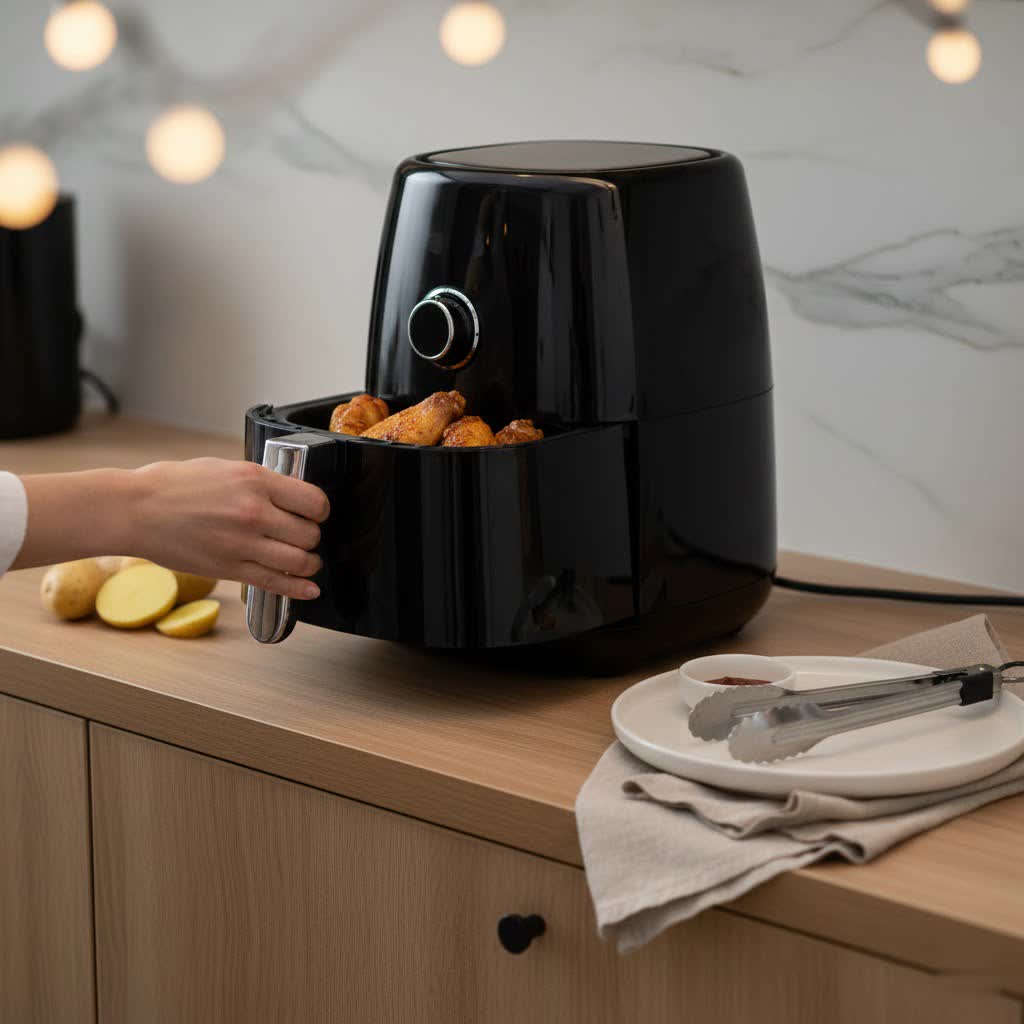
Table is empty.At its core, an air fryer’s non-stick coating, often made from materials like PTFE (Teflon) or ceramic, creates a slick barrier that prevents food from adhering to the basket or tray. This feature is vital for healthy cooking as it reduces the need for excessive oil, allowing ingredients to crisp up without sticking. Beyond culinary benefits, the non-stick surface simplifies cleanup significantly, saving time and effort after each use. A healthy coating means easier food release, better cooking results, and a more enjoyable experience overall.
Signs Your Air Fryer Coating is Damaged vs. Just Dirty
It’s easy to mistake stubborn baked-on residue for actual coating damage, and misidentifying the problem can lead to further harm. Baked-on film often appears as a brown or amber patch, feels mostly smooth (though possibly tacky), and tends to concentrate in corners or under the crisper plate. This type of buildup can often be remedied with a good soak. True coating damage, however, typically presents as a raised edge, a bubbled or lifted surface, or visible flakes. Food will also begin to stick aggressively in these specific damaged spots, even after cleaning, indicating the protective layer is compromised.
Common Mistakes That Ruin Your Air Fryer Coating
Many everyday habits, though seemingly harmless, can significantly degrade your air fryer’s non-stick surface over time. Identifying and correcting these practices is the first step toward preserving your appliance.
Using Harsh or Abrasive Cleaning Tools
One of the most frequent culprits behind damaged air fryer coatings is the use of inappropriate cleaning tools. Metal brushes, scouring pads, and even stiff-bristled plastic brushes can easily scratch and chip away the delicate non-stick layer. Hard scrubbing, especially when trying to remove stubborn, baked-on food, only exacerbates the problem, lifting edges and enlarging peeled areas. Always opt for soft cleaning implements to protect the surface.
Relying on Aerosol Cooking Sprays
Aerosol cooking sprays are convenient, but they are particularly detrimental to non-stick coatings. These sprays often contain propellants, anti-foaming agents, and emulsifiers, such as lecithin, that can break down the non-stick surface. Over time, these chemicals leave a sticky, baked-on film that is difficult to remove. This residue not only makes food stick but also encourages users to scrub harder, leading to premature peeling and degradation of the coating.
Employing Metal Utensils for Cooking
Just as abrasive cleaning tools can cause damage, so can sharp metallic cooking utensils. Forks, knives, metal-tipped tongs, and spatulas can inadvertently scratch, chip, or gouge the non-stick coating when retrieving or turning food. Even a small scratch can become a weak point, leading to further peeling over time and compromising the integrity of the surface.
Neglecting Immediate or Proper Cleaning
Delaying cleanup allows food residues, oils, and grease to dry and bake onto the basket, making them much harder to remove later. When faced with stubborn, caked-on messes, the temptation to scrub aggressively increases, which, as mentioned, is highly damaging. Regular, prompt cleaning after each use prevents this buildup and allows for gentler cleaning methods.
Washing Your Air Fryer Basket in the Dishwasher
While some air fryer manufacturers label components as “dishwasher safe,” consistent dishwasher use can significantly shorten the lifespan of the non-stick coating. The combination of high heat, harsh detergents, and the physical abrasion of water jets or contact with other dishes can gradually dull, weaken, and ultimately strip away the protective layer, even if it doesn’t cause immediate peeling.
Exposing the Basket to Thermal Shock
Sudden temperature changes, known as thermal shock, can stress the materials of your air fryer basket, potentially causing the non-stick coating to crack or peel. Plunging a hot air fryer basket directly into cold water for cleaning is a common mistake that can induce this stress. It’s crucial to allow the basket to cool down to room temperature before washing.
Using the Wrong Type or Too Much Oil
Using cooking oils with a low smoke point at high air frying temperatures can lead to excessive smoking and the formation of tenacious, burnt-on residues. This residue is incredibly difficult to clean and, again, often prompts more aggressive scrubbing. Furthermore, using too much oil can create more grease buildup, intensifying the cleaning challenge and risking coating damage.
Choosing a Low-Quality Air Fryer
Not all air fryers are created equal, and cheaper models often skimp on the quality and thickness of their non-stick coatings. These inferior coatings are more susceptible to breaking down under regular use, high temperatures, and even gentle cleaning. While a bargain air fryer might seem appealing initially, it can lead to frustration and a need for premature replacement due to coating failures.
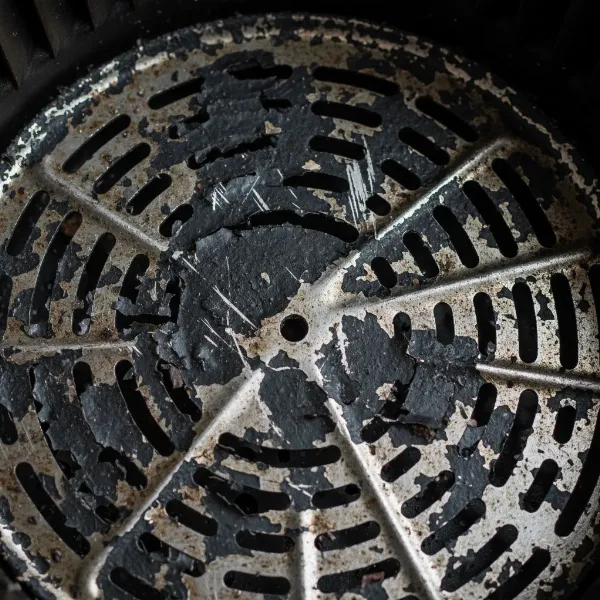 An air fryer basket showing a peeling non-stick coating due to common usage mistakes, illustrating damage and wear.
How to Protect Your Air Fryer’s Non-Stick Coating
Preserving your air fryer’s non-stick coating is simpler than you might think and mainly involves adopting mindful cooking and cleaning habits.
Gentle Cleaning Practices
The golden rule for maintaining non-stick surfaces is gentleness. After each use, allow the basket to cool down. For light messes, a simple wipe with a soft cloth or sponge and warm, soapy water is usually sufficient. For more stubborn residues, fill the basket with warm water and a few drops of dish soap, letting it soak for 10-20 minutes to loosen any baked-on food before gently wiping it clean. Never use abrasive scrubbers or steel wool.
Opt for Non-Aerosol Oil Application
To avoid the harmful effects of aerosol cooking sprays, invest in a refillable oil mister. This allows you to use your preferred cooking oil without propellants and emulsifiers, providing a light, even coating. Alternatively, you can brush a small amount of oil directly onto your food before placing it in the air fryer basket.
Use Air Fryer-Safe Utensils
Protect the non-stick surface by using only non-metal utensils. Silicone, wood, or heat-resistant plastic spatulas and tongs are ideal choices. These materials are soft enough not to scratch or chip the coating, ensuring its longevity.
Hand Wash for Longevity
Even if your air fryer basket is labeled “dishwasher safe,” hand washing is almost always the gentler option. It gives you more control over the cleaning process, allowing you to avoid harsh detergents and extreme temperatures that can degrade the non-stick coating over time. A quick hand wash with mild dish soap is often sufficient.
Allow Cooling Before Cleaning
Always let your air fryer basket and components cool down completely before washing them. This simple step prevents thermal shock, which can cause the non-stick coating to crack or peel due to rapid temperature changes. Patience is key to preserving your appliance.
Choose Quality Oils and Use Sparingly
Select cooking oils with high smoke points, such as avocado, grapeseed, or canola oil, for air frying. These oils are more stable at high temperatures, reducing the likelihood of burning and creating stubborn residues. Use oil sparingly; a thin coating is often all that’s needed for excellent results.
When to Replace Your Air Fryer Basket
Despite your best efforts, non-stick coatings do have a finite lifespan. It’s important to know when a damaged coating signifies that it’s time for a replacement. Signs of true damage include a visibly peeling or flaking coating, areas where the non-stick surface is bubbled or lifted, or when you can feel a raised edge with your fingertip. If you start seeing exposed metal or notice that food consistently sticks aggressively in one spot despite thorough cleaning, it’s a clear indicator that the coating is compromised beyond repair and the basket should be replaced for optimal performance and safety.
Buying Guide: Choosing an Air Fryer with Durable Coating
When in the market for a new air fryer, prioritizing the durability of its non-stick coating can save you headaches in the long run.
Factors to Consider for Coating Durability
Look for air fryers from reputable brands known for their quality and customer satisfaction. While specific coating materials can vary, a brand with a strong warranty and positive reviews regarding product longevity often indicates a more durable non-stick surface. Consider models that feature ceramic coatings, which are generally more resistant to scratches than traditional PTFE, though both require proper care. Reading user reviews specifically about coating durability can also provide valuable insights into real-world performance.
> “Proper air fryer maintenance isn’t just about cleanliness; it’s about understanding the delicate balance of heat, friction, and chemical interaction that affects non-stick surfaces. A little care goes a long way in preserving your investment.” – Chef Elena Rodriguez, Culinary Technology Expert
Conclusion
Your air fryer is a valuable kitchen appliance, and its non-stick coating is essential for its performance and ease of use. By avoiding common mistakes such as aggressive cleaning, using aerosol sprays, employing metal utensils, and neglecting proper washing techniques, you can significantly extend the life of your air fryer basket. Embrace gentle care, choose the right tools and oils, and be mindful of temperature changes. Adopting these simple habits will ensure your air fryer remains a reliable and efficient cooking companion for years to come. What simple change will you make today to protect your air fryer’s coating?
Frequently Asked Questions
Is it safe to use an air fryer with a peeling non-stick coating?
It is generally not recommended to use an air fryer with a peeling non-stick coating. Small flakes of the coating can come off and potentially mix with your food. While modern non-stick coatings are designed to be non-toxic, it’s best to replace the basket to ensure food safety and maintain optimal cooking performance.
How often should I clean my air fryer basket?
Ideally, you should clean your air fryer basket after every use. This prevents food residue and grease from baking on and becoming harder to remove. For quick cleanups, simply wiping it down after it cools is sufficient. For more thorough cleaning, a gentle soak and wash with mild soap and a soft sponge will keep it in excellent condition.
