Do you ever find yourself staring at an appliance advertisement, wondering whether an air fryer or a convection oven is the true culinary champion your kitchen needs? It’s a common dilemma, as both promise faster cooking and deliciously crispy results, often leading to confusion about their actual distinctions. While they share a fundamental principle of circulating hot air, their methods, applications, and ultimate outcomes are surprisingly diverse. Understanding these core differences is key to unlocking the full potential of your cooking and making an informed choice that perfectly aligns with your lifestyle and culinary ambitions. This comprehensive guide will slice through the confusion, offering clarity on how each appliance works, where it shines, and which one will truly elevate your everyday meals.
Air Fryer vs. Convection Oven: Understanding the Basics
At their heart, both air fryers and convection ovens employ the power of moving hot air to cook food more efficiently than traditional methods. However, the intensity and focus of this airflow define their unique characteristics and capabilities.
What is a Convection Oven? How Does It Work?
|
Our Picks for the Best Air fryer in 2026
As an Amazon Associate I earn from qualifying purchases.
|
||
| Num | Product | Action |
|---|---|---|
| 1 | Chefman Air Fryer 8 Qt | TurboFry® 4-in-1 with 450°F Hi-Fry Option for Crispier Results | Bake, Dehydrate, Frozen | XL Nonstick Dishwasher-Safe Basket | Stainless Steel |

|
| 2 | Sweetcrispy 6.34QT Air Fryer, 8-in-1 Air Fryers Oven with Visible Window, 400℉ Fast Heating, Nonstick Dishwasher-Safe Basket, Timer & Auto-Off, Stainless Steel, Grey |
|
| 3 | Cosori 9-in-1 TurboBlaze Air Fryer 6 Qt, PFAS-Free Ceramic Coating, 90°–450°F, Precise Heating for Even Results, Air Fry, Roast, Bake, Broil, Dry, Frozen, Proof, Reheat, Keep Warm, 120V, Dark Gray |
|
| 4 | Chefman Air Fryer – 4 QT Compact Airfryer for Quick & Easy Meals in Minutes, Features Hi-Fry Technology for Extra Crisp, Touchscreen Controls with 4 Presets, Nonstick & Dishwasher Safe Basket - Black |
|
| 5 | OLIXIS 3QT Air Fryer, Small Air Fryer with Digital PP Touch Panel, 400℉ Max Temp, Overheat Protection and Auto Shut-off, Nonstick and Dishwasher Safe Basket for Roast, Bake, Broil, Reheat, White |
|
| 6 | CHEFMAN Multifunctional Digital Air Fryer+ Rotisserie, Dehydrator, Convection Oven, 17 Touch Screen Presets Fry, Roast, Dehydrate, Bake, XL 10L Family Size, Auto Shutoff, Large Easy-View Window, Black |
|
| 7 | Instant Pot 6QT VORTEX Plus Air Fryer, 6-in-1, Air Fry, Broil, Dehydrate, Crisp, Roast, Reheat, Bake, Dishwasher-Safe Airfryer basket, from the Makers of Instant Pot, Stainless Steel |
|
| 8 | Ninja Air Fryer with Air Crisp | 5 QT Capacity fits up to 4lbs of Fries | 4-in-1 Pro Air Fry, Roast, Reheat, Dehydrate | 400°F Max Temp | 1750 Watts | W/Nonstick Basket & Crisper Plate | Grey | AF141 |
|
| 9 | CHEFMAN 2 Qt Mini Air Fryer – Digital Space-Saving Compact Air Fryer with Nonstick and Dishwasher Safe Basket, Quick & Easy Meals in Minutes, Features Digital Timer and Shake Reminder – Black |
|
| 10 | Ninja XL Air Fryer with MaxCrisp | 6.5 QT Capacity | 6-in-1 Max Crisp, Air Fry, Roast, Bake, Reheat & Dehydrate | 450°F Temp | 1750 Watts | Nonstick Basket, Crisper Plate & Recipe Guide | Grey | AF181 |
|
A convection oven is an oven equipped with a fan and an exhaust system that circulates hot air evenly around the food within its baking chamber. Unlike a conventional oven that relies on static heat, this continuous airflow eliminates hot and cold spots, ensuring that dishes cook more uniformly and often more quickly. This consistent heat distribution is particularly beneficial for achieving even browning on baked goods, perfectly roasted meats, and casseroles. Key features typically include fan-assisted heating, adjustable racks, and precise temperature control, making it a versatile workhorse for a wide range of cooking tasks, especially when preparing larger quantities or multiple dishes simultaneously.
What is an Air Fryer? How Does It Work?
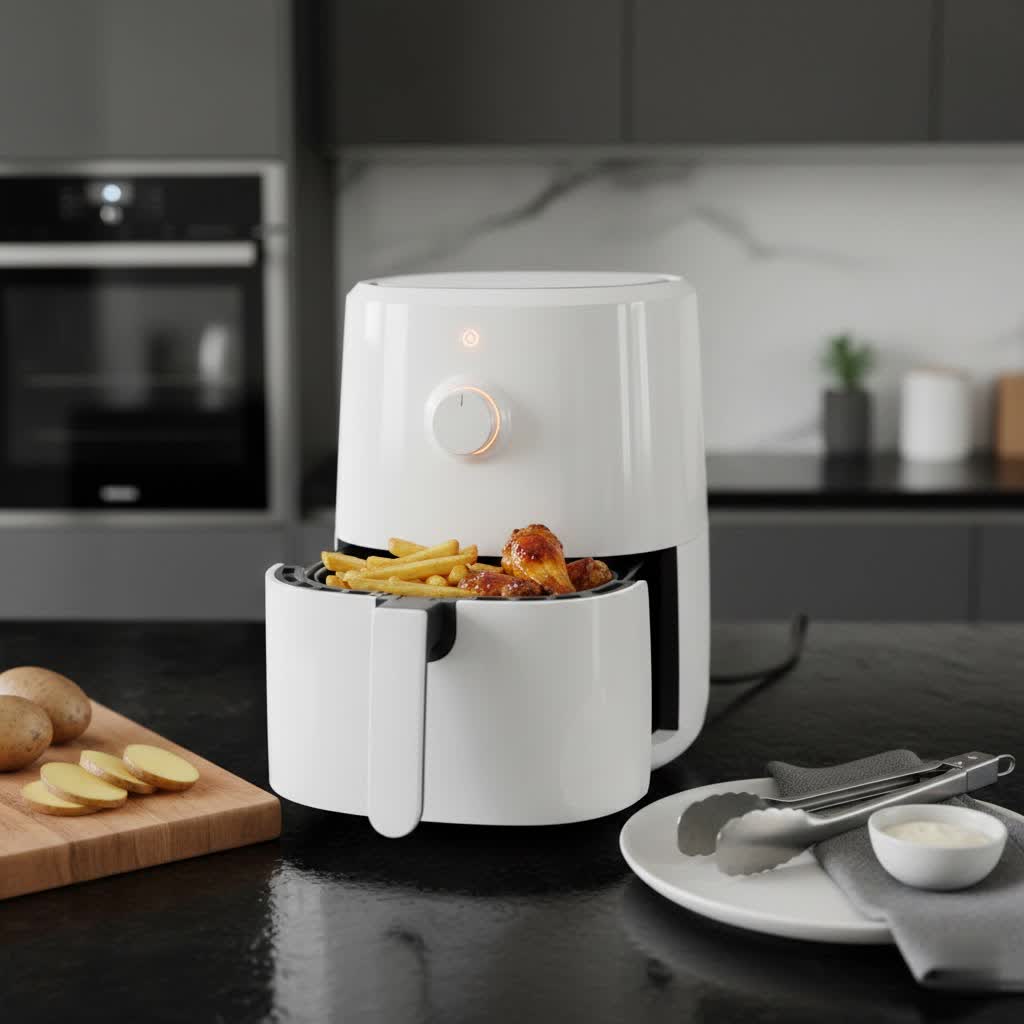
An air fryer is primarily a compact countertop appliance designed to mimic the results of deep frying using minimal to no oil. It works by rapidly circulating superheated air at a very high speed within a small, enclosed chamber. This intense, concentrated airflow quickly cooks the food from all sides, creating a crispy, golden-brown exterior. Many modern air fryers also function as small ovens, often combining traditional toaster oven capabilities like baking, toasting, and roasting, alongside their signature crisping function. The health benefits of air frying are a significant draw, as it allows you to enjoy traditionally “fried” foods with considerably less fat and calories.
The Core Difference: Fan Speed, Airflow, and Chamber Size
The fundamental distinction between an air fryer and a convection oven lies in the speed and intensity of the fan, the volume of air circulated, and the size of the cooking chamber. A convection oven uses a fan to gently move hot air around a larger space, promoting even cooking and consistent results across multiple racks. Its circulation is designed for general baking and roasting. In contrast, an air fryer employs a much more powerful fan and often a more direct heating element to aggressively circulate superheated air in a much smaller, confined space. This rapid, concentrated airflow is specifically engineered to create that characteristic crispy, “fried-like” texture quickly on foods.
Benefits and Limitations: Which Appliance Excels Where?
While both appliances share the convection principle, their optimized designs mean they excel at different culinary tasks, each with its own set of advantages and limitations.
For Baking and Roasting
When it comes to baking and roasting, the convection oven generally takes the lead, particularly for larger items and batch cooking. Its spacious interior and gentler, consistent heat circulation allow for multiple trays of cookies, cakes, bread, or a large roast to cook evenly without frequent rotation. The larger capacity means consistent results for bigger items. An air fryer, with its smaller basket and intense airflow, is better suited for smaller batches or single items where a crisp exterior is desired. For instance, while an air fryer can make crispy roasted vegetables, a convection oven is ideal for roasting a whole chicken or a substantial pan of root vegetables for a family meal.
For Crispy “Fried” Foods
This is where the air fryer truly shines. Its design is perfectly optimized to deliver that coveted golden, crunchy texture reminiscent of deep-fried foods, but with a fraction of the oil. French fries, chicken wings, breaded cutlets, and crispy vegetables achieve an unparalleled crispness in an air fryer, often faster and with less effort than in a convection oven. While a convection oven can certainly crisp up food, it typically won’t achieve the same level of intense crunch as an air fryer due to its less aggressive airflow and larger chamber.
Capacity and Versatility
Capacity is a major differentiating factor. Convection ovens, whether stand-alone or integrated into a full-size range, offer significantly larger cooking capacities, making them ideal for preparing family meals, entertaining guests, or batch cooking. They are highly versatile, capable of baking, roasting, broiling, and often dehydrating, handling diverse cooking styles. Air fryers, on the other hand, are typically countertop appliances with limited capacity, best suited for single servings, small side dishes, or quick snacks. While some larger air fryer ovens exist, they generally cannot match the internal volume of a full-size convection oven.
Speed and Efficiency
Air fryers are renowned for their speed. Their compact size and powerful, concentrated heating mean they preheat very quickly and cook small portions significantly faster than a full-size convection oven. This makes them highly energy-efficient for preparing individual meals or quick snacks. A convection oven, while faster than a conventional oven, still requires a longer preheat time due to its larger volume. However, for larger quantities or multiple dishes, the overall efficiency of a convection oven for batch cooking can be superior, as it can cook more food at once.
Health Benefits: A Look at Cooking with Less Oil
Both air fryers and convection ovens offer healthier cooking alternatives compared to traditional deep frying, but they approach fat reduction in slightly different ways.
Air frying has a distinct advantage when it comes to dramatically reducing fat intake. By using rapid, superheated air to achieve crispiness, it requires little to no added oil for many dishes that would otherwise be submerged in hot oil. This significantly lowers the fat and calorie content of foods like french fries, chicken nuggets, and spring rolls, making them a much healthier choice. Convection ovens also contribute to healthier cooking by evenly roasting or baking foods without excessive oil, providing a great method for preparing balanced meals. For example, roasting vegetables or lean meats in a convection oven is inherently healthier than pan-frying them. While both support a trend toward more nutritious meals, air fryers particularly excel at transforming high-fat “fried” favorites into lower-fat options.
Dedicated Appliances vs. Integrated Oven Features
The market now offers both dedicated countertop air fryers and full-size ovens that come equipped with “air fry” and “convection” modes, adding another layer to the comparison.
Standalone Air Fryers
Dedicated countertop air fryers are compact and perfect for individuals or small households with limited kitchen space. They are designed for maximum crisping efficiency and quick operation, making them ideal for daily use for snacks, appetizers, or small side dishes. Their portability and ease of use for specific tasks are significant advantages.
Full-Size Ovens with Air Fry & Convection Modes
Many modern full-size ranges and wall ovens now include both “True Convection” and a dedicated “Air Fry” mode. These integrated appliances offer the best of both worlds, combining the large capacity and versatility of a convection oven with the specialized crisping power of an air fryer. When an oven has both settings, the “Air Fry” mode typically features a more powerful convection element and a higher fan speed than the standard “Convection” bake setting. This allows it to achieve that intense, rapid air circulation needed for air frying, while the “Convection” mode uses a gentler fan for even baking and roasting across multiple racks. This dual functionality can be a game-changer for families or those who enjoy a wide variety of cooking methods without needing multiple countertop appliances.
How to Choose the Right Appliance for Your Kitchen
Deciding between an air fryer, a convection oven, or an appliance with both modes depends heavily on your specific kitchen setup, cooking habits, and culinary aspirations.
Consider Your Cooking Needs and Habits
Start by evaluating what and how often you cook. Do you frequently prepare meals for a large family or host dinner parties? A convection oven’s larger capacity and ability to handle multiple dishes simultaneously will be invaluable. If your cooking primarily involves quick weeknight meals, crispy snacks, or small portions, a dedicated air fryer might be more practical. Consider the types of dishes you make most often – do you bake cakes and roasts, or do you crave crispy chicken wings and french fries?
Kitchen Space and Budget
Kitchen space is a crucial factor. Countertop air fryers require dedicated counter space, which can be limited in smaller kitchens. A full-size convection oven, whether built-in or as part of a range, occupies a larger footprint. Budget also plays a role; a basic countertop air fryer is generally less expensive than a full-size oven with convection and air fry capabilities. However, when considering the long-term value and versatility, an integrated oven might be a more cost-effective solution than buying multiple specialized appliances.
The “Do-It-All” Option: Ovens with Dual Modes
For those who desire both the expansive capabilities of a convection oven and the specialized crisping of an air fryer, a full-size oven equipped with both modes presents an excellent “do-it-all” solution. These appliances eliminate the need for an additional countertop gadget, saving space while offering maximum cooking flexibility. They are particularly well-suited for families or avid home cooks who enjoy experimenting with different textures and cooking styles without compromise.
Maximizing Your Cooking with Both Technologies
Whether you opt for a dedicated appliance or an integrated oven, understanding how to best utilize air frying and convection cooking will unlock a world of delicious possibilities.
Tips for Air Frying
To get the crispiest results from your air fryer, avoid overcrowding the basket. Cook in single layers or small batches to allow the hot air to circulate effectively around each piece of food. Shake the basket frequently during cooking to ensure even browning. A light spray of oil can enhance crispiness and flavor, but generally, much less is needed compared to traditional frying. Air fryers are fantastic for frozen foods like fries, tater tots, and chicken tenders, transforming them into perfectly crispy treats.
Tips for Convection Cooking
When using a convection oven, you often need to adjust traditional recipes. A good rule of thumb is to reduce the suggested temperature by about 25°F (15°C) or shorten the cooking time by 25%. This is because the circulating hot air cooks food faster and more evenly. Use bakeware with lower sides to allow for better airflow around the food. Convection is excellent for multi-rack baking, allowing you to cook multiple trays of cookies or vegetables simultaneously with consistent results across all racks.
Buying Guide
Factors to Consider When Purchasing an Air Fryer or Convection Oven
When making your decision, think about the following:
- Capacity: How many people do you typically cook for? This will determine the ideal size.
- Space: Do you have ample countertop space for a dedicated air fryer, or would an integrated oven feature be more suitable?
- Versatility: Do you need an appliance for a wide range of cooking tasks (convection oven) or primarily for crispy, “fried” results (air fryer)?
- Speed: Is quick meal preparation a top priority? Air fryers generally offer faster cooking times for smaller items.
- Budget: What is your comfort level for investment in a new kitchen appliance?
- Health Goals: How important is significantly reducing oil in your cooking? Both offer benefits, but air fryers excel here.
“The true magic of modern kitchen appliances lies in their ability to adapt to our busy lives and diverse palates. Whether you prioritize speed and crispiness or capacity and versatility, there’s a perfect cooking companion waiting to transform your kitchen.” – Chef Amry, Designer Appliances
Conclusion
The debate between an air fryer and a convection oven isn’t about one being inherently “better” than the other; rather, it’s about understanding their distinct strengths and matching them to your unique cooking needs. Air fryers excel at delivering quick, intensely crispy, “fried-like” results with minimal oil, making them perfect for small portions and healthier indulgence. Convection ovens, with their larger capacity and gentler, even heat circulation, are unparalleled for baking, roasting large dishes, and cooking multiple items simultaneously. Modern kitchens also offer the convenience of ovens integrating both “Air Fry” and “Convection” modes, providing maximum flexibility in a single appliance. By considering your kitchen space, family size, typical meals, and desired cooking outcomes, you can confidently choose the appliance that will truly enhance your culinary journey.
Which appliance will you choose to transform your cooking experience today?
Frequently Asked Questions
Is an air fryer the same as a convection oven?
No, an air fryer is not the same as a convection oven, although both use circulating hot air. An air fryer employs rapid, concentrated airflow in a smaller chamber for quick, crispy, fried-like results, while a convection oven uses gentler circulation over a larger space for even baking and roasting, suitable for bigger batches.
Which is better for baking: a convection oven or an air fryer?
A convection oven is generally better for baking because its larger interior and consistent heat distribution allow multiple trays of items like cookies, cakes, or bread to cook uniformly. An air fryer’s smaller capacity and intense heat are less ideal for delicate or large-batch baking.
Do air fryer ovens cook faster than convection ovens?
Yes, air fryer ovens typically cook faster than convection ovens for small meals. Their compact design and concentrated, rapid air circulation transfer heat more efficiently, leading to quicker preheating and cooking times for smaller food items.
What are the health benefits of air frying vs. convection cooking?
Air frying offers significant health benefits by producing crispy, flavorful foods with little to no oil, thus reducing fat and calorie intake. Convection cooking also provides a healthier alternative to deep frying by evenly roasting or baking foods without excess oil, supporting overall nutritious meal preparation.
Can an air fryer replace a convection oven?
An air fryer can replace a convection oven for cooking small, quick meals or snacks that benefit from a crispy texture. However, it cannot match a convection oven’s capacity, versatility for large-batch baking, roasting substantial dishes, or cooking multiple items at once.
Which is more energy-efficient: an air fryer oven or a convection oven?
An air fryer oven is generally more energy-efficient than a convection oven for small meals. Its compact size and rapid air circulation heat food faster and use less electricity. A convection oven consumes more energy when cooking larger quantities or multiple dishes due to its larger volume.
